What Size Crane Do I Need? A Complete Capacity Guide
One of the first questions when specifying an overhead crane is “what size do I need?” Getting the capacity right is crucial – too small and you can’t lift what you need to, too large and you’ve overspent on a crane that’s more than the job requires. This guide helps you work out the right capacity for your application.
Understanding Crane Capacity
Crane capacity – also called Safe Working Load (SWL) or Working Load Limit (WLL) – is the maximum weight the crane is designed to lift safely. This is the total weight suspended from the hook, which includes:
- The load itself – the item you’re lifting
- Lifting accessories – chains, slings, shackles, spreader beams, grabs, magnets
- The hook block – usually accounted for in the crane’s rated capacity
Critical: Don’t Forget Lifting Accessories
A common mistake is to specify crane capacity based only on the load weight. If your heaviest load is 4.5 tonnes but you use a 500kg spreader beam, you need at least 5 tonnes capacity. Always factor in the weight of lifting accessories.
How to Calculate the Capacity You Need
Simple Capacity Formula
Work out your minimum crane capacity using this formula:
- Maximum load – the heaviest single item you’ll ever need to lift
- Lifting accessories – total weight of slings, beams, grabs, magnets etc.
- Safety margin – typically 10-20% for future needs and variations
Example Calculation
A steel fabricator needs to lift steel plate packages:
- Heaviest plate package: 3,800kg
- Lifting magnet: 450kg
- Chains and shackles: 50kg
- Total lifted weight: 4,300kg
- With 15% margin: 4,945kg
- Recommended capacity: 5 tonnes
Crane Capacities at a Glance
Here’s a quick reference showing typical applications for each capacity range:
| Capacity | Typical Applications | Common Industries |
|---|---|---|
| 1-3 Tonnes | Small components, tooling, maintenance tasks, light assembly | Workshops, maintenance bays, light manufacturing |
| 4-6 Tonnes | Engine blocks, machine parts, steel sections, palletised goods | Engineering, fabrication, warehousing |
| 10 Tonnes | Heavy machinery, large fabrications, steel plate, vehicle components | Heavy engineering, automotive, steel processing |
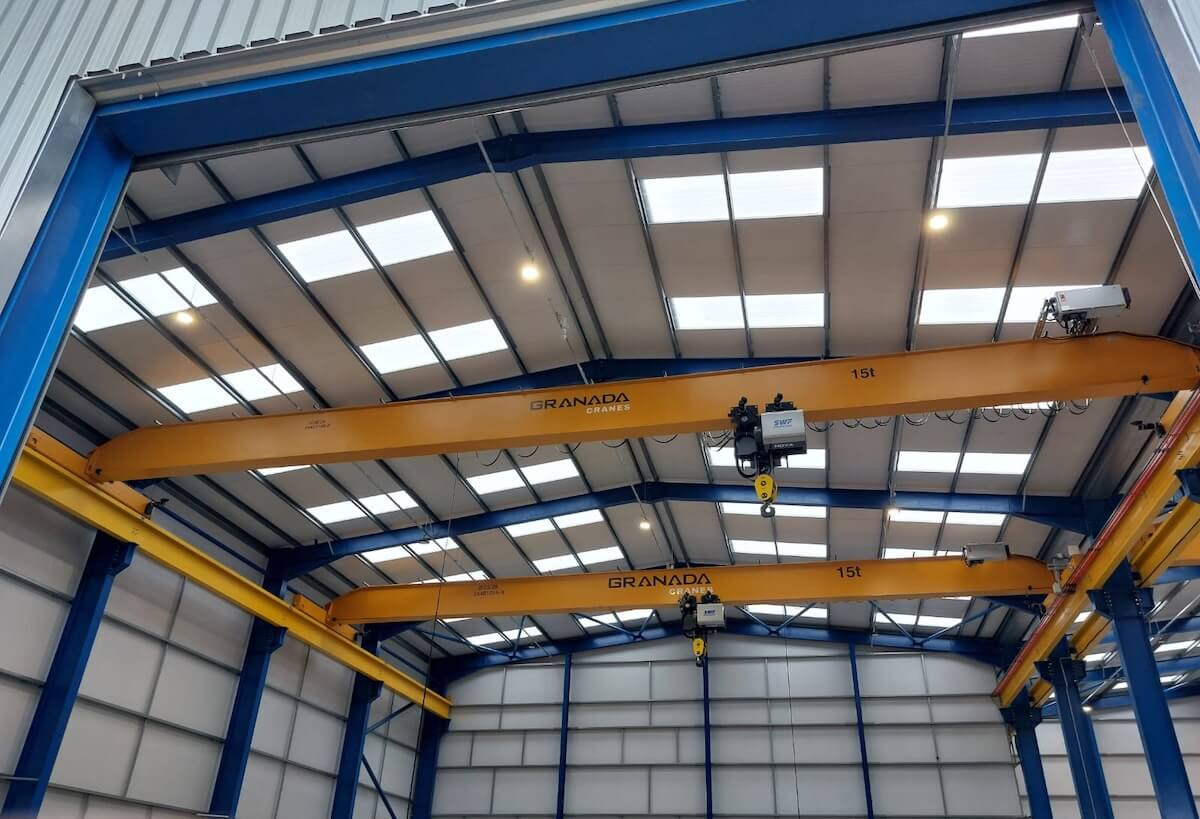
| 15 Tonnes | Large steel assemblies, heavy equipment, press tools | Steel fabrication, heavy manufacturing |
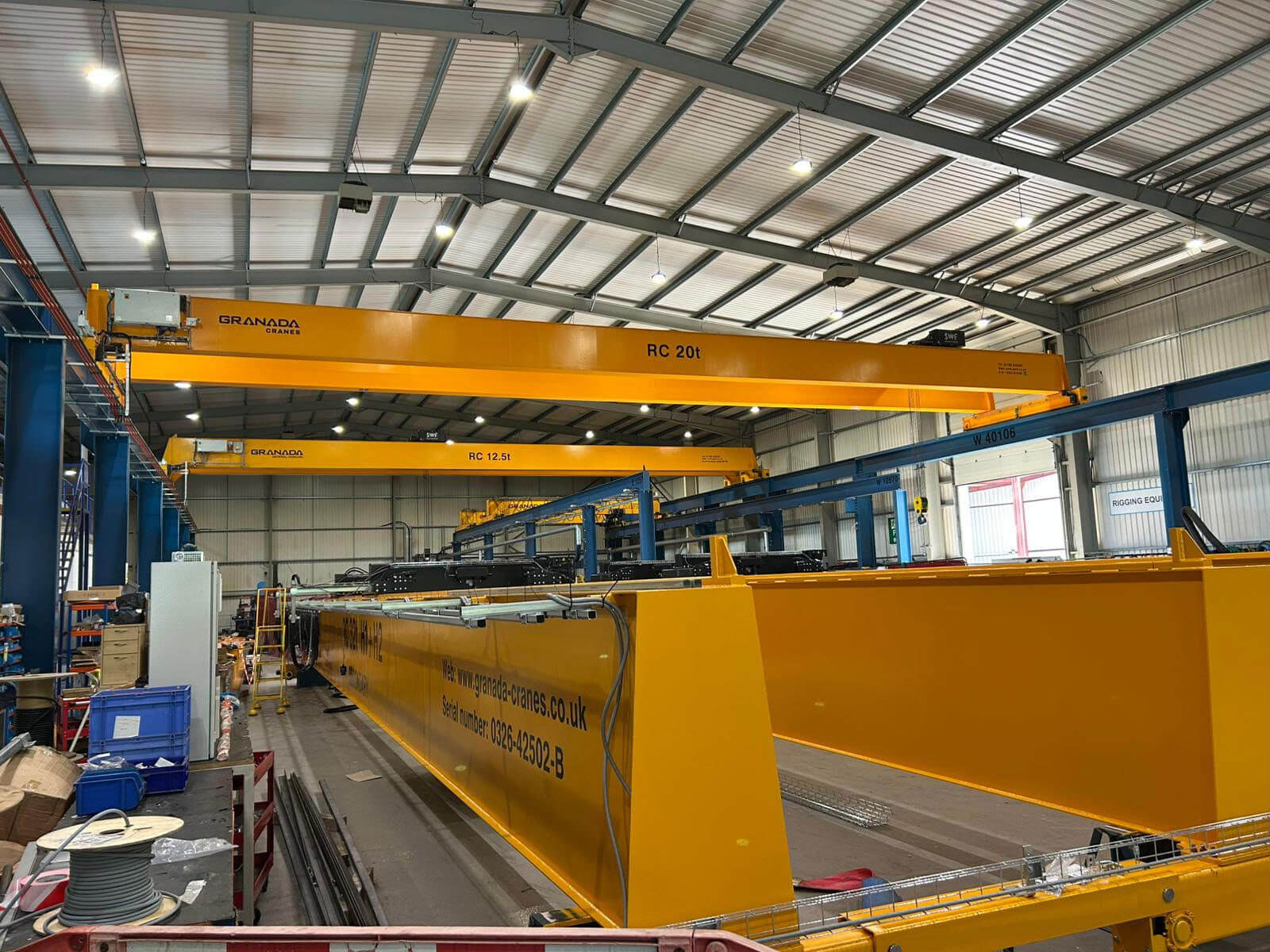
| 20 Tonnes | Steel coils, large castings, heavy plant equipment | Steel stockholding, foundries, power generation |
| 30+ Tonnes | Very heavy fabrications, ship sections, large transformers | Shipbuilding, heavy industry, infrastructure |
Browse Cranes by Capacity
Explore our overhead crane range by tonnage:
Capacity Guide by Application
Not sure where to start? Here are detailed breakdowns for each capacity range:
1-3 Tonne Cranes
1,000-3,000kg
Ideal for light manufacturing, maintenance, and assembly operations where loads are relatively small but need to be moved frequently.
- Small machine components
- Tooling and fixtures
- Maintenance lifting
- Assembly line work
- Packaging and pallets
4 Tonne Cranes
4,000kg
A popular choice for general engineering workshops where loads exceed light-duty requirements but don’t need heavy-duty equipment.
- Small engine blocks
- Steel beams and sections
- Medium fabrications
- Machine tool loading
- Container handling
5 Tonne Cranes
5,000kg
One of the most common capacities, offering a good balance between capability and cost for general industrial applications.
- Automotive components
- Steel plate handling
- General fabrication
- Warehouse operations
- Machine shop work
6 Tonne Cranes
6,000kg
Slightly more capacity than 5 tonne for applications where standard loads occasionally exceed 5 tonnes with lifting accessories.
- Heavier fabrications
- Large vehicle components
- Press tool handling
- Steel processing
- Die and mould work
10 Tonne Cranes
10,000kg
The workhorse of heavy engineering. Capable of handling substantial loads while still being suitable for single girder designs.
- Large steel fabrications
- Heavy machinery
- Steel stockholding
- Automotive production
- Aerospace components
15 Tonne Cranes
15,000kg
For heavy industrial applications requiring substantial lifting power. Often the threshold where double girder designs become preferred.
- Heavy steel assemblies
- Large machine tools
- Transformer handling
- Heavy press work
- Infrastructure components
20 Tonne Cranes
20,000kg
Heavy duty lifting for demanding industrial environments. Typically requires double girder construction for the load and span.
- Steel coils
- Large castings and forgings
- Power generation equipment
- Shipbuilding components
- Mining equipment
30+ Tonne Cranes
30,000kg+
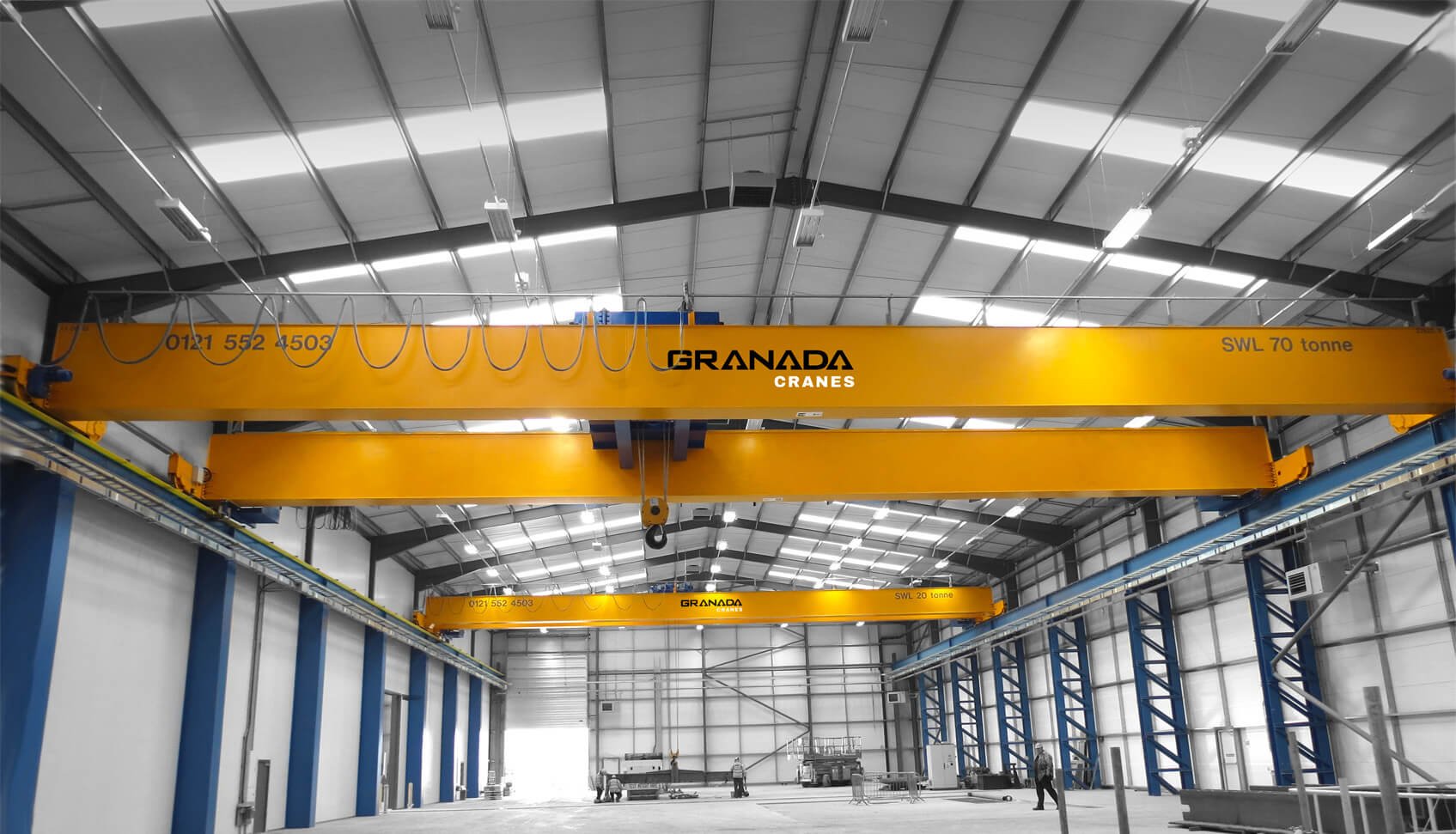
Specialist heavy lifting for the most demanding applications. Custom-engineered double girder cranes up to 60+ tonnes capacity.
- Very heavy fabrications
- Ship sections
- Large transformers
- Steelworks applications
- Heavy plant and machinery
Quick Decision Guide
What Capacity Do You Need?
Industry-Specific Capacity Examples
| Industry | Typical Loads | Common Capacities |
|---|---|---|
| Steel Fabrication | Steel plate, beams, finished fabrications | 5t, 10t, 15t |
| Automotive | Body panels, engines, sub-assemblies | 3t, 5t, 10t |
| Aerospace | Aircraft components, tooling, engines | 5t, 10t, 15t |
| Warehousing | Palletised goods, machinery, stock | 3t, 5t |
| Steel Stockholding | Steel coils, plate packs, sections | 10t, 15t, 20t |
| Shipbuilding | Hull sections, heavy equipment | 20t, 30t, 50t+ |
| Machine Shops | Workpieces, tooling, finished parts | 3t, 5t |
| Power Generation | Turbines, generators, transformers | 15t, 20t, 30t+ |
Things to Consider Beyond Capacity
While capacity is crucial, it’s not the only factor. These also influence your crane specification:
Higher Capacity Affects
- Crane weight – heavier cranes need stronger building structures
- Girder type – higher capacities often require double girder
- Hoist size – larger hoists need more headroom
- Cost – both initial purchase and running costs increase
- Power requirements – bigger motors need more electrical supply
Future-Proofing
- Will your lifting requirements increase?
- Are you planning to take on heavier work?
- Could you acquire heavier equipment?
- Is there potential for business growth?
- What’s the cost difference to go one size up?
The Upgrade Question
It’s much cheaper to specify slightly higher capacity from the start than to upgrade later. If you’re between sizes and there’s any chance you’ll need the extra capacity, consider going up. The price difference is often modest compared to the cost of replacing or modifying a crane later.
What Information Do You Need to Get a Quote?
Information to Gather
- Maximum single load weight you need to lift
- Weight of lifting accessories (slings, beams, grabs, magnets)
- Typical everyday load weight
- How often the crane will be used (lifts per hour/day)
- Building dimensions (width, length, height to underside of roof)
- Any specific requirements (explosion-proof, clean room, outdoor use)
Common Mistakes When Choosing Capacity
- Forgetting lifting accessories – slings, spreader beams and grabs can add hundreds of kilos
- Using average weight, not maximum – the crane must handle your heaviest load, not your typical load
- No safety margin – allow 10-20% for future needs and load variations
- Ignoring future plans – if you’re growing, factor in tomorrow’s requirements
- Over-specifying – paying for capacity you’ll never use wastes money and may need unnecessary building reinforcement
Not Sure What Size You Need?
Our team can help you work out the right capacity for your application. Tell us what you need to lift and we’ll advise on the best solution.
Summary
Key Takeaways
- Calculate total lifted weight – load plus all lifting accessories
- Add a safety margin – 10-20% for future needs and variations
- Consider future requirements – upgrading later is expensive
- Match capacity to application – don’t over or under-specify
- Higher capacity affects more than price – building structure, headroom, power supply
- Ask for advice – a good supplier will help you get it right
Choosing the right crane capacity is a balance between meeting your current needs, allowing for future growth, and not over-investing in capability you won’t use. Take time to audit your lifting requirements thoroughly before specifying.
Explore our full range of overhead gantry cranes from 1 tonne to 60+ tonnes, or contact our team to discuss your requirements.
The advice, graphics, images, and information provided herein are for general educational and informational purposes only and are intended to promote overall safety awareness. They do not constitute legal, medical, or other professional advice or services and should not be relied upon as a substitute for consultation with suitably qualified professionals. The content is not intended to be comprehensive, and users should seek independent professional advice appropriate to their specific circumstances.