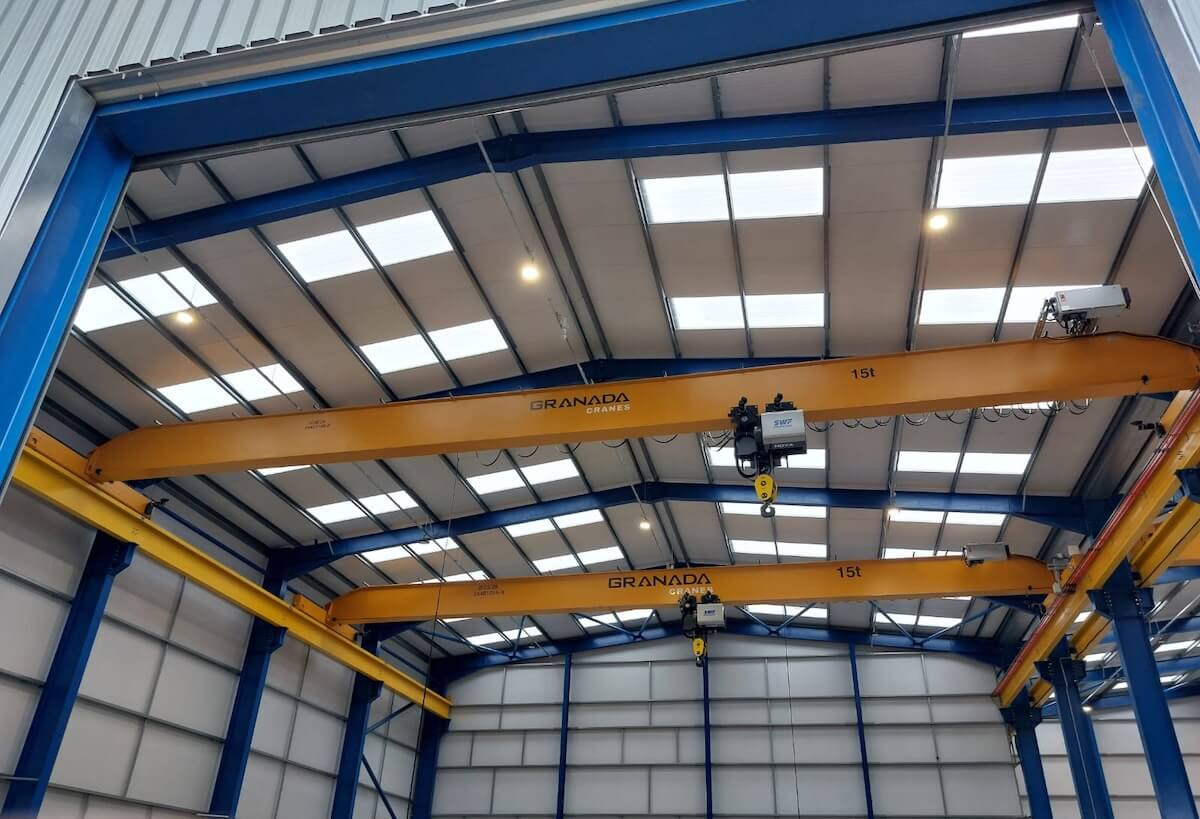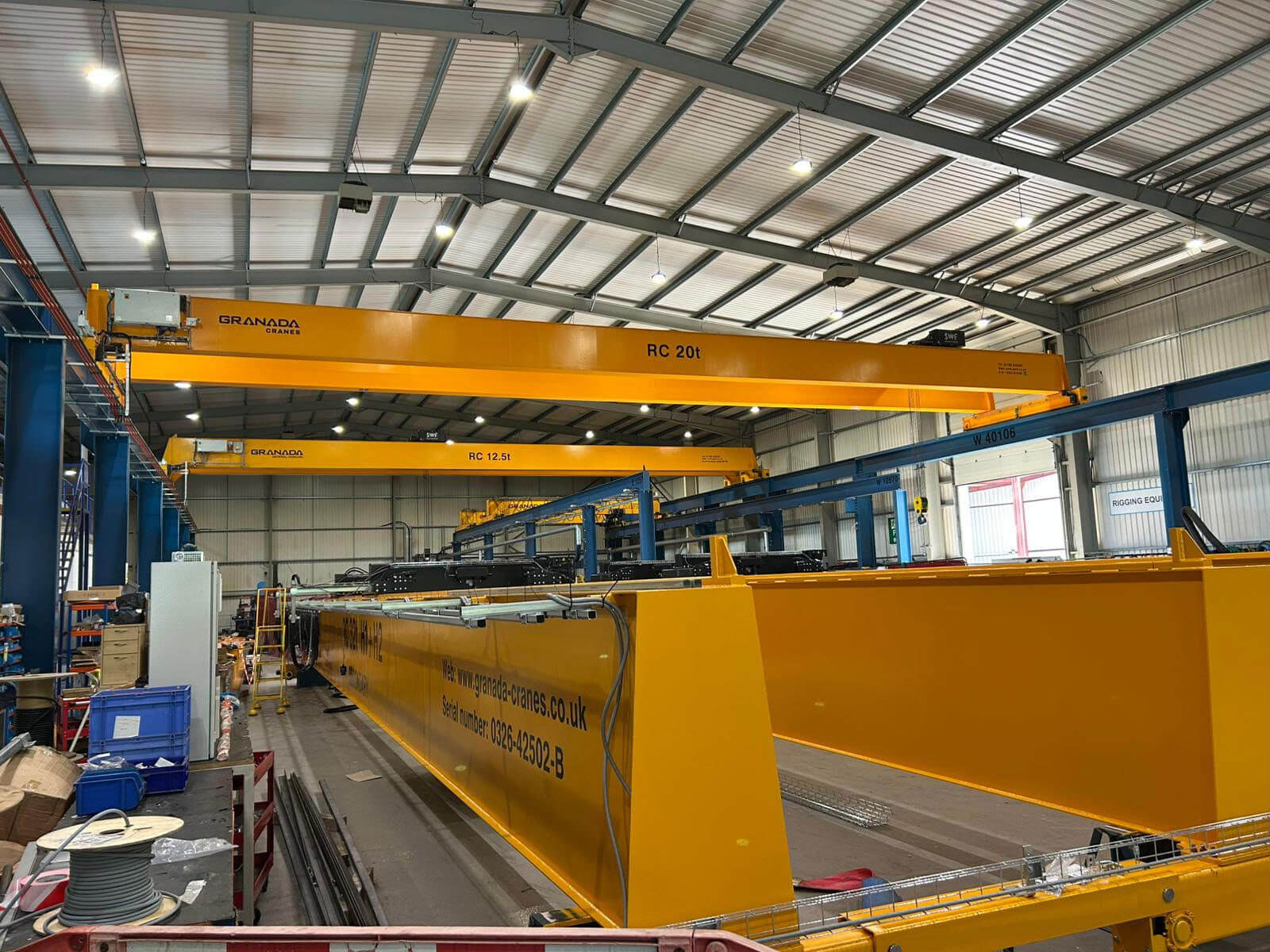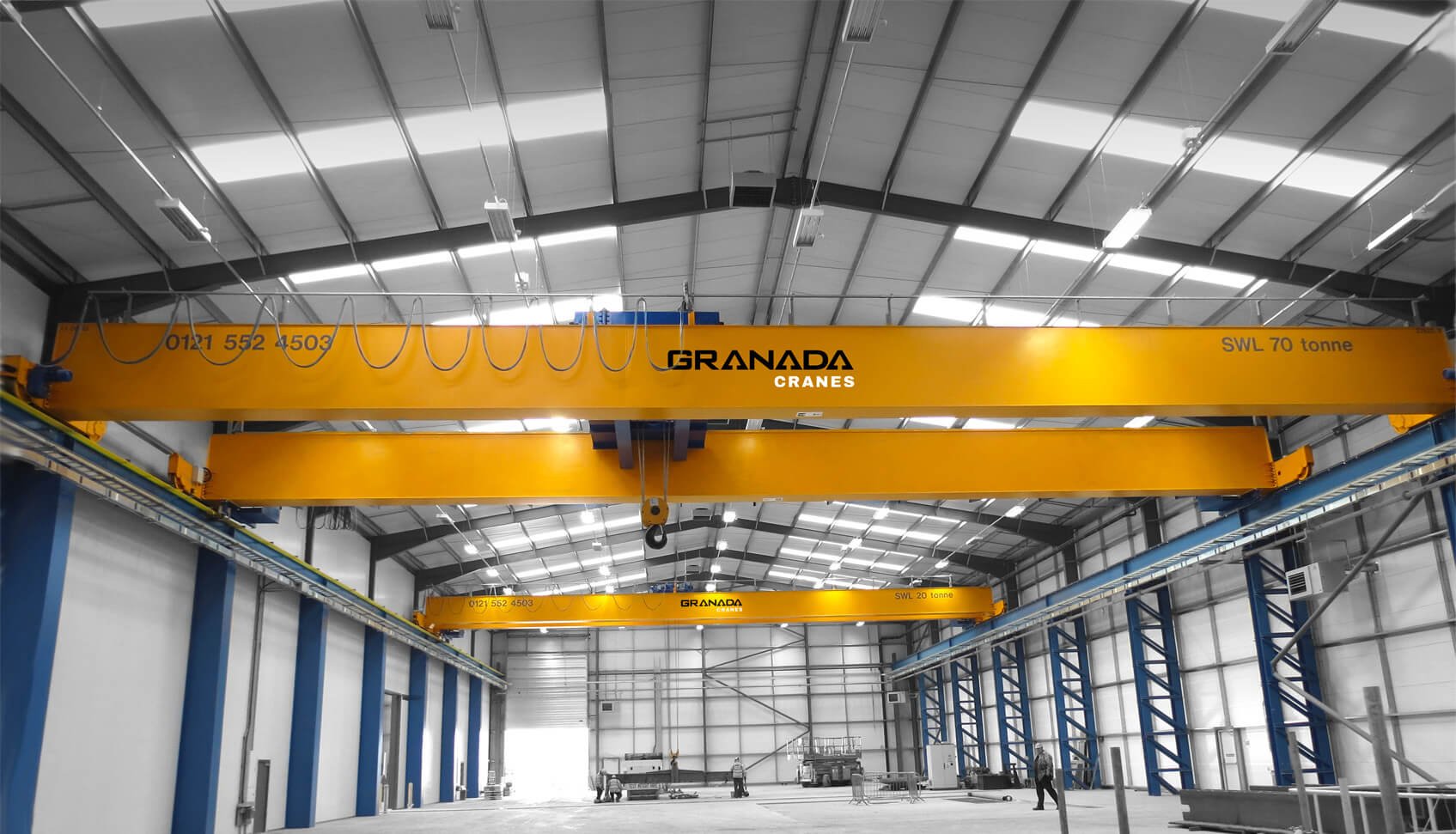
Building Requirements for Overhead Cranes: What You Need to Know
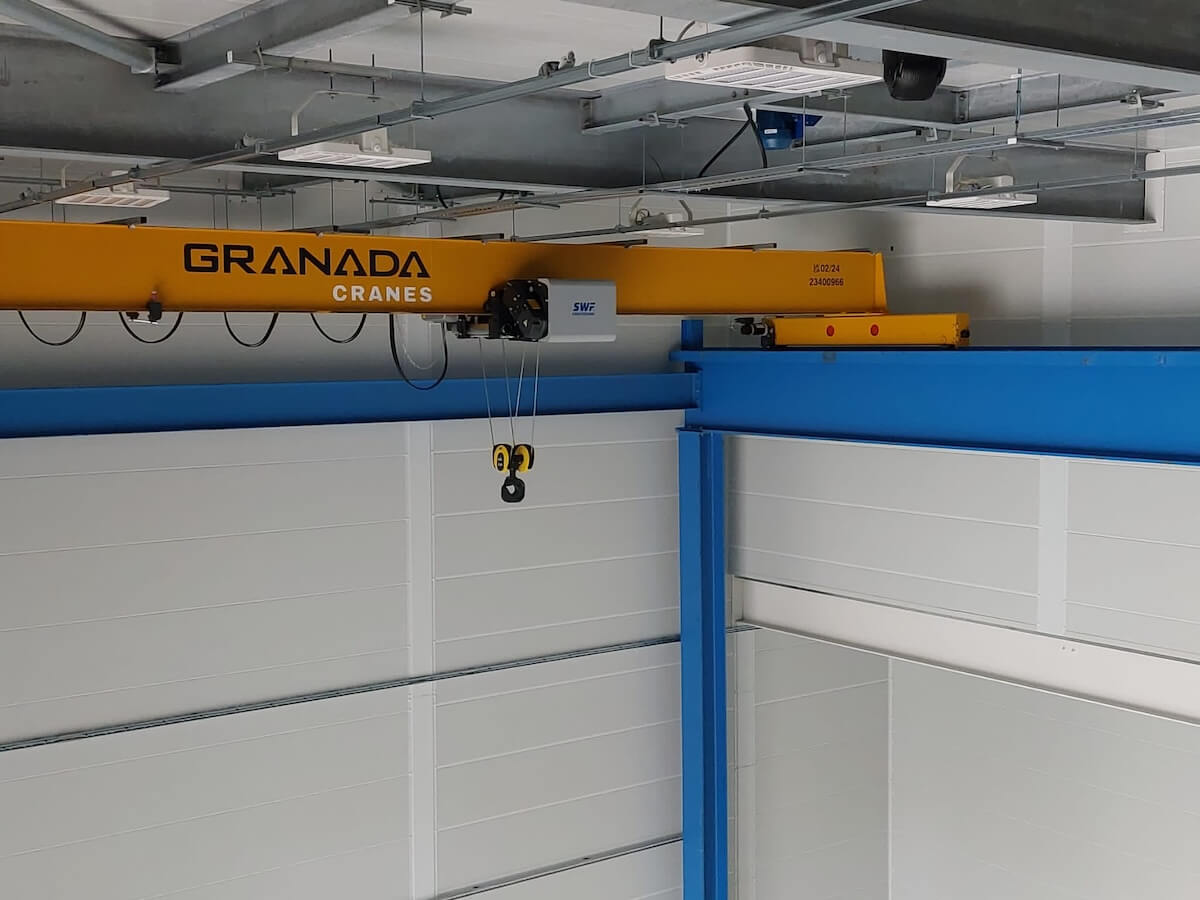
What you need to know before specifying a crane – from small workshops to large industrial facilities
What This Guide Covers
Structural capacity
Headroom & lifting height
Power supply
New build vs existing
Whether you’re planning a crane for a small engineering workshop or a large aerospace facility, getting the building requirements right from the start is essential. The wrong assumptions can lead to costly modifications, reduced capacity, or discovering the crane you need simply won’t fit.
Why Building Requirements Matter
An overhead crane transfers significant loads through your building every time it lifts, travels, and brakes. Understanding your building’s capabilities early helps you:
Structural Capacity: Can Your Building Take the Load?
This is the most fundamental question. Your building structure needs to handle multiple force types:
Requirements by Crane Capacity
Headroom and Lifting Height
The available height in your building directly affects useful lift. Understanding the relationship between building height and hook height is crucial.
Key Vertical Dimensions
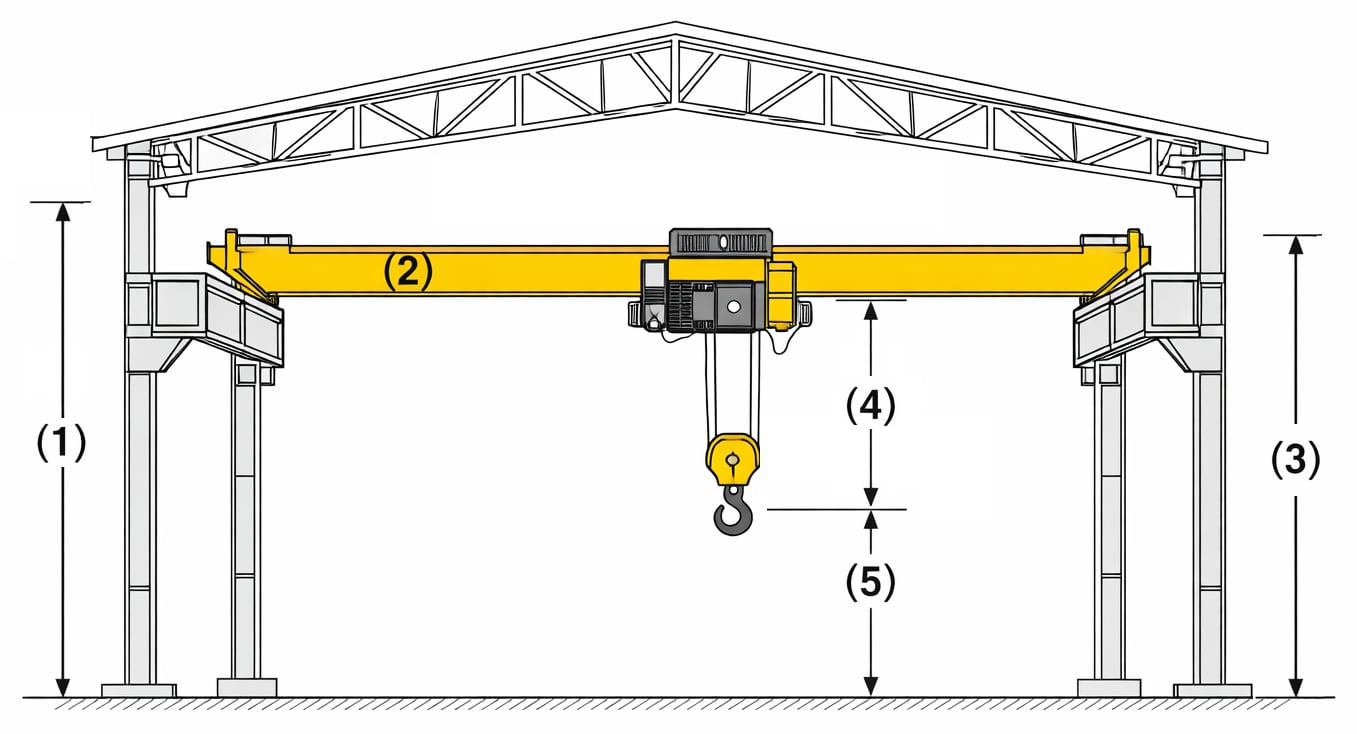
1
Clear height before obstructions
2
Varies by span and load
3
Vertical space the crane occupies
4
Rail to hook at highest position
5
Actual lift available above floor
Limited Headroom? Here Are Your Options
Low headroom hoistsMinimise distance between rail and hook
Single girder cranesHoist runs on bottom flange, uses less vertical space
Underslung cranesCrane runs beneath runway beams
Optimised runway positioningBalance hook height with clearance above crane
Read more: Overhead crane installations with low headroom challenges
Span and Coverage
The span (distance between runway rails) determines width of coverage and needs to work with your building’s column layout.
Small to Medium Spans
Typical of workshops, maintenance facilities, smaller manufacturing. Single girder cranes often most cost-effective for capacities up to 10 tonnes.
Large Spans
Common in larger facilities, warehouses, aerospace hangars. Double girder designs typically required. For very large spans, consider Goliath cranes.
When to Consider Free-Standing Systems
Not every building can support an overhead crane from its structure. Free-standing systems transfer loads directly to the floor instead.
Consider Free-Standing When:
Existing structure can’t support crane loads
Structural reinforcement cost is prohibitive
Crane needed in only part of the building
Building is leased – modifications not permitted
Future relocation anticipated
Recent Project
Free-Standing Solution in Stockport
We recently installed a bespoke 5-tonne free-standing gantry system for a plastic injection moulding manufacturer, where the crane needed to serve a specific machine without requiring building modifications.
Power Supply Requirements
Overhead cranes require electrical power for hoist, bridge travel, and trolley motors. Your building needs adequate supply at the right location.
| Crane Type | Typical Supply | Notes |
|---|---|---|
| Light duty Up to 3 tonnes |
415V 3-phase 16–32A |
Standard industrial supply often sufficient |
| Medium duty 3–20 tonnes |
415V 3-phase 32–63A |
Dedicated supply usually required |
| Heavy duty 20+ tonnes |
415V 3-phase 63A+ |
May require supply upgrade |
Power Distribution Methods
Festoon CableCables suspended from trolley system – common for shorter travel distances
Conductor BarEnclosed rails with sliding collectors – higher duty, longer travel
Cable ReelsMotorised drums that pay out and retract – specific applications
New Build vs Existing Building
New Build
Design Around the Crane
You have the opportunity to optimise everything:
- Column spacing matched to crane span
- Building height designed for desired hook height
- Structural design incorporates crane loads
- Foundations designed for crane loads
- Power supply specified correctly
- Services routed to avoid conflicts
Existing Building
Work With What You Have
Requires careful assessment of what’s already there:
- Structural survey to determine capacity
- Identify modifications needed
- Work within fixed dimensions
- Coordinate with existing services
- May need to accept compromises
- Free-standing may be the solution
Industry-Specific Considerations
Aerospace
Large spans for airframe handling, high bays, precision control, anti-collision systems, multiple cranes in same facility.
Automotive
High duty cycles, production line coordination, fast travel speeds, tandem lifting for vehicle bodies.
Steel Fabrication
Heavy lifting, demanding duty cycles, combined with manipulators and welding, magnetic/vacuum attachments.
Warehousing
Long spans for storage areas, clear height for racking, lower duty cycles but full building coverage needed.
Food & Pharma
Hygiene requirements, stainless steel construction, sealed components, washdown capability, cleanroom specs.
Timber & Sawmill
Outdoor or semi-enclosed environments, long loads, robust construction, weather protection for components.
Often Overlooked: Access Requirements
Installation Access
- Will bridge beams fit through doors?
- Space for mobile cranes outside?
- Overhead obstructions to work around?
- Can crane erect itself in sections?
Maintenance Access
- Safe access to runway level
- Walkways for larger installations
- Access to bridge and hoist
- Space to isolate and work safely
Throughout the crane’s life, engineers need access for servicing, LOLER inspections, and repairs. Plan for this from the start.
What We Provide
At Granada Cranes, we support you through the entire process:
Site Surveys
Assess existing buildings
Load Data
For structural engineers
CAD Drawings
Coordination with building design
Guidance
Best crane for your building
Full Service
Design, manufacture, install
Quick Summary
Structural capacity is fundamental – your building must handle dead loads, live loads, and dynamic forces.
Requirements scale significantly from small workshops (up to 3t) through to heavy industrial (20t+).
Headroom matters – understand the relationship between building height and useful hook height.
Free-standing systems are the solution when buildings can’t support structure-mounted cranes.
Involve your crane supplier early – whether new build or existing, we can help get it right.
Planning a Crane Installation?
Whether you’re working with an existing building or designing a new facility, our team can advise on the right crane solution for your requirements.
Or call us: 0800 376 27 27
The advice, graphics, images, and information provided herein are for general educational and informational purposes only and are intended to promote overall safety awareness. They do not constitute legal, medical, or other professional advice or services and should not be relied upon as a substitute for consultation with suitably qualified professionals. The content is not intended to be comprehensive, and users should seek independent professional advice appropriate to their specific circumstances.