Lifting beams and spreader beams are both below-the-hook lifting devices used with overhead cranes – but they’re not the same thing. Choosing the wrong one can mean inefficient lifts, wasted headroom, or equipment that doesn’t suit your load. This guide explains the difference and helps you decide which you actually need.
The Key Difference: It’s About the Forces
The fundamental difference between lifting beams and spreader beams comes down to the type of force acting on the beam during a lift:
Lifting Beam
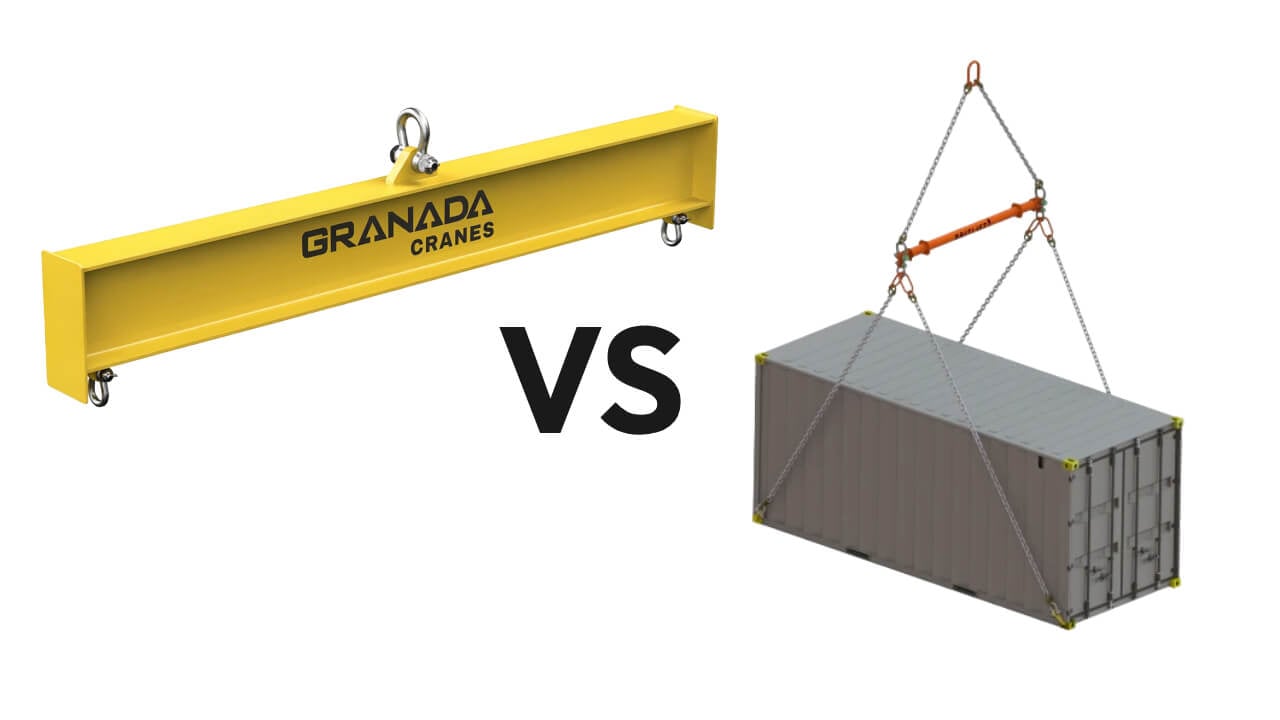
Subject to bending forces. The beam has a single top attachment point connected directly to the crane hook, with the load hanging from multiple points along the bottom. The beam bends under load.
Spreader Beam
Subject to compressive forces. The beam has slings at each end connecting up to the crane hook, with the load attached at the ends. The beam is squeezed (compressed) between the sling attachment points.
This difference in forces affects the beam’s design, weight, cost, headroom requirements, and suitability for different applications.
Visual Comparison
The easiest way to tell them apart is to look at how they connect to the crane hook:
Lifting Beam
- Single top connection
- Multiple bottom points
- Beam bends under load
Spreader Beam
- Two top slings to hook
- Two end pick points
- Beam compresses
Lifting Beam vs Spreader Beam: Quick Comparison
| Factor | Lifting Beam | Spreader Beam |
|---|---|---|
| Force on beam | Bending | Compression |
| Top attachment | Single central point to hook | Two end points via slings to hook |
| Bottom pick points | Multiple (2, 3, 4 or more) | Two (at beam ends) |
| Headroom required | Less – beam sits flat below hook | More – slings add height above beam |
| Beam weight | Heavier – must resist bending | Lighter – compression is more efficient |
| Cost | Typically higher | Typically lower |
| Best for | Multi-point lifts, awkward shapes, limited headroom | Long loads, two-point lifts, sling angle control |
When to Use a Lifting Beam
A lifting beam is the right choice when:
- Your load has multiple fixed lift points – machinery, fabrications, or assemblies with specific rigging positions that don’t suit a simple two-point sling arrangement.
- You need more than two bottom pick points – three, four, or more attachment points to distribute load or match the load’s geometry.
- Headroom is limited – because the beam attaches directly to the hook with no additional slings above, you use less vertical space.
- The load has an awkward or off-centre centre of gravity – adjustable pick points on a lifting beam allow you to balance uneven loads.
- You need the load to remain perfectly level – a rigid beam with multiple pick points provides better control than angled slings.
- The load is fragile or cannot tolerate inward sling pressure – vertical slings from a lifting beam don’t squeeze the load like angled slings might.
Typical Lifting Beam Applications
- Machine tools, presses, and industrial equipment
- Precast concrete panels, beams, and stair flights
- Moulds, dies, and tooling
- Transformers and electrical switchgear
- Fabricated steelwork with defined lift points
- Any load requiring precise, multi-point rigging
When to Use a Spreader Beam
A spreader beam is the right choice when:
- You’re lifting long loads – pipes, beams, panels, or bundles where two-point lifting at the ends is appropriate.
- You need to control sling angles – spreader beams keep slings vertical (or near-vertical) below the beam, preventing them from crushing or sliding off the load.
- The load could be damaged by inward sling pressure – by spreading the slings apart, you avoid pinching or crushing the load.
- Weight matters – spreader beams are lighter than equivalent lifting beams because they only resist compression, not bending.
- Cost is a factor – simpler design and less material generally means lower cost.
- You have adequate headroom – the slings above the beam add height, so you need space for them.
Typical Spreader Beam Applications
- Structural steel beams and columns
- Pipes, tubes, and long bundles
- Cladding panels and curtain wall sections
- Timber and plywood packs
- Shipping containers and large crates
- Any long load benefiting from two-point, spread lifting
Which Do You Need? A Quick Decision Guide
Answer these questions to determine which beam type suits your application:
Still unsure? Contact us with details of your load and we’ll recommend the right solution.
Headroom: A Critical Factor
One of the most important practical differences is headroom – the vertical space between the crane hook and the top of your load.
Lifting Beam Headroom
A lifting beam connects directly to the hook, so you only lose the depth of the beam itself (plus any fittings). This makes lifting beams ideal for facilities with limited hook height or low buildings.
Spreader Beam Headroom
A spreader beam requires slings above the beam connecting to the hook. These slings add significant height – potentially 1-2 metres or more depending on the beam length and sling angle. Always calculate whether you have enough hook height before specifying a spreader beam.
Fixed vs Adjustable Beams
Both lifting beams and spreader beams are available in fixed and adjustable configurations:
Fixed Beams
- Pick points in set positions
- Simpler, more robust construction
- Ideal for repetitive lifts of the same product
- Lower cost
Adjustable Beams
- Pick points can be repositioned (sliding or bolted)
- Accommodate different load sizes
- Flexibility for varied product ranges
- Slightly higher cost but greater versatility
If you lift a variety of products with different dimensions, an adjustable beam can be more cost-effective than multiple fixed beams.
Compliance & Certification
Both lifting beams and spreader beams are classified as lifting accessories under UK regulations and must comply with:
- LOLER 1998 – Lifting Operations and Lifting Equipment Regulations require that all lifting accessories are fit for purpose, properly marked, and subject to thorough examination.
- PUWER 1998 – Provision and Use of Work Equipment Regulations require equipment to be safe and suitable for use.
- Supply of Machinery (Safety) Regulations – New beams must be CE/UKCA marked with a Declaration of Conformity.
Thorough Examination
All lifting accessories, including lifting beams and spreader beams, require thorough examination by a competent person at least every 6 months under LOLER (or in accordance with an examination scheme).
Lifting Beams & Spreader Beams from Granada Cranes
We supply both lifting beams and spreader beams – standard designs and fully bespoke solutions:
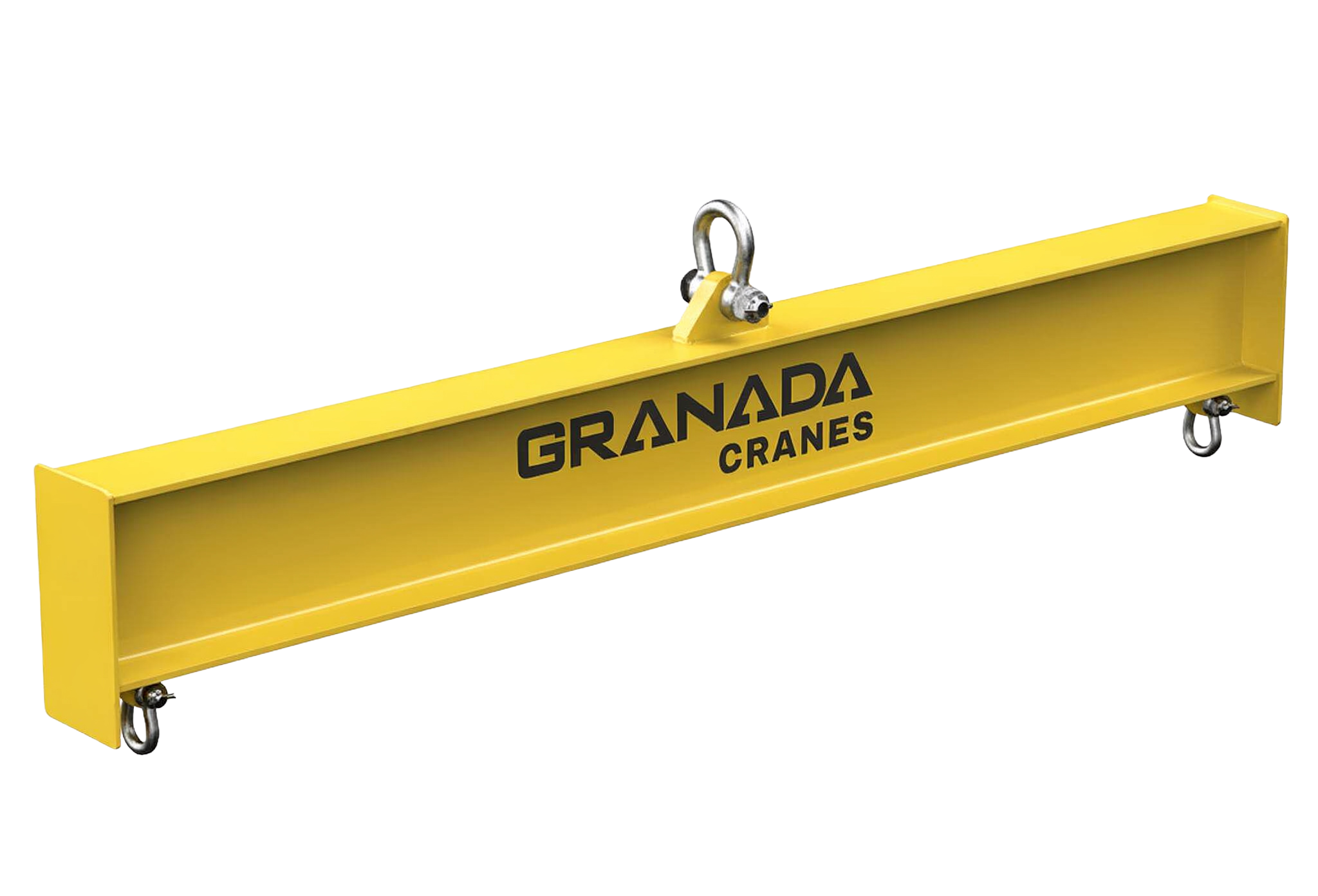
Lifting Beams
Bespoke and standard lifting beams with two, three, four or more pick points. Designed and manufactured to your requirements.
View Lifting Beams →
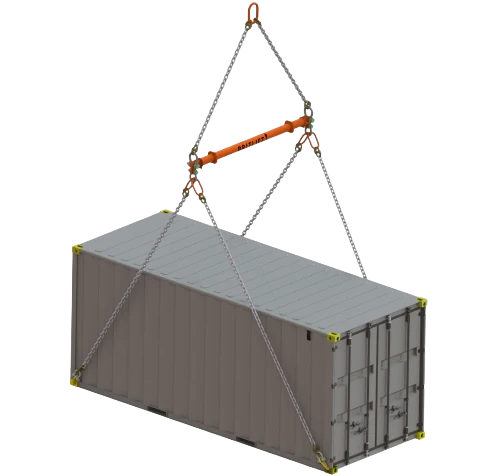
Spreader Beams
Fixed, adjustable, and modular spreader beams for two-point lifting of long or wide loads.
View Spreader Beams →
Not sure which you need? Send us your load details – weight, dimensions, lift points, and available headroom – and we’ll recommend the right solution and provide a quote.
Summary
Choose a Lifting Beam if:
- You need 3+ bottom pick points
- Headroom is limited
- Load has fixed rigging points
- Load is awkward or off-balance
- You need precise level control
Choose a Spreader Beam if:
- Two-point lifting at ends is sufficient
- Headroom is plentiful
- Load is long and uniform
- You need to control sling angles
- Weight and cost are priorities
Need Help Choosing?
Tell us about your load and lifting requirements. We’ll recommend the right beam type and provide a competitive quote for supply, testing, and certification.
Get Expert Advice
Or call: 0800 376 27 27