LOLER Inspections Explained: What You Need to Know
If you operate overhead cranes, hoists, or lifting accessories, you’re legally required to have them inspected at regular intervals under LOLER. But what exactly does a LOLER inspection involve? How often do you need one? And what happens if the inspector finds a problem? This guide covers everything you need to know.
What Is a LOLER Inspection?
A LOLER inspection – properly called a thorough examination – is a detailed inspection of lifting equipment required under the Lifting Operations and Lifting Equipment Regulations 1998 (LOLER).
The purpose is to detect defects, damage, or wear that could make the equipment unsafe. Unlike a routine service or visual check, a thorough examination is a comprehensive inspection carried out by a competent person, with a formal written report.
Key Point: Thorough Examination vs Service
A thorough examination is not the same as a service. Servicing keeps your equipment running smoothly through lubrication, adjustment, and minor repairs. A thorough examination is a statutory inspection to verify the equipment is safe. You need both – one doesn’t replace the other.
What Equipment Needs a LOLER Inspection?
LOLER applies to all lifting equipment used at work. If it lifts a load (including people), it needs thorough examination.
Single & double girder
Full & semi-gantry
Pillar, wall & free-standing
Chain & wire rope
Chain blocks & lever hoists
Chains, slings, shackles
Scissor lifts & platforms
Column & cantilever
Mast & attachments
This also includes lifting accessories – chains, wire rope slings, webbing slings, shackles, eyebolts, spreader beams, lifting magnets, vacuum lifters, and any other device used to attach the load to the lifting equipment.
How Often Do You Need a LOLER Inspection?
LOLER sets maximum intervals between thorough examinations. These are legal requirements, not recommendations.
| Equipment Type | Maximum Interval | Notes |
|---|---|---|
| Overhead cranes, gantry cranes, jib cranes | 12 months | Or in accordance with an examination scheme |
| Hoists (electric and manual) | 12 months | Includes chain blocks, lever hoists, electric hoists |
| Lifting accessories (chains, slings, shackles) | 6 months | More frequent due to higher wear rates |
| Equipment used to lift people | 6 months | Passenger lifts, MEWPs, access platforms |
| New equipment (before first use) | Before use | Unless EC Declaration of Conformity held |
| After major repair or modification | Before return to service | Any work affecting safety-critical components |
Don’t Forget Your Lifting Accessories
Lifting accessories require inspection every 6 months – twice as often as the crane itself. This is a common compliance gap. Make sure your slings, chains, shackles, and spreader beams are included in your inspection schedule.
What Happens During a LOLER Inspection?
A thorough examination is exactly that – thorough. The competent person will systematically check all safety-critical components. Here’s what to expect:
Documentation Review
The examiner will review previous examination reports, maintenance records, and any reported defects or incidents since the last inspection.
Visual Inspection
A detailed visual check of all components – structure, mechanisms, wiring, controls, labels, and safety devices. Looking for corrosion, cracks, wear, damage, and anything unusual.
Functional Testing
The equipment is operated through its full range of movements. All motions tested – hoisting, lowering, traversing, travelling, slewing (where applicable).
Safety Device Checks
Testing of limit switches, overload devices, emergency stops, brakes, and other safety systems. These must function correctly to prevent accidents.
Load Testing (If Required)
Not always necessary, but may be required after installation, major repair, or if there’s reason to doubt the equipment’s integrity. Typically 110-125% of safe working load.
Report Completion
A formal written report is produced detailing findings, any defects, and whether the equipment is safe to continue in service.
What Does the Examiner Check?
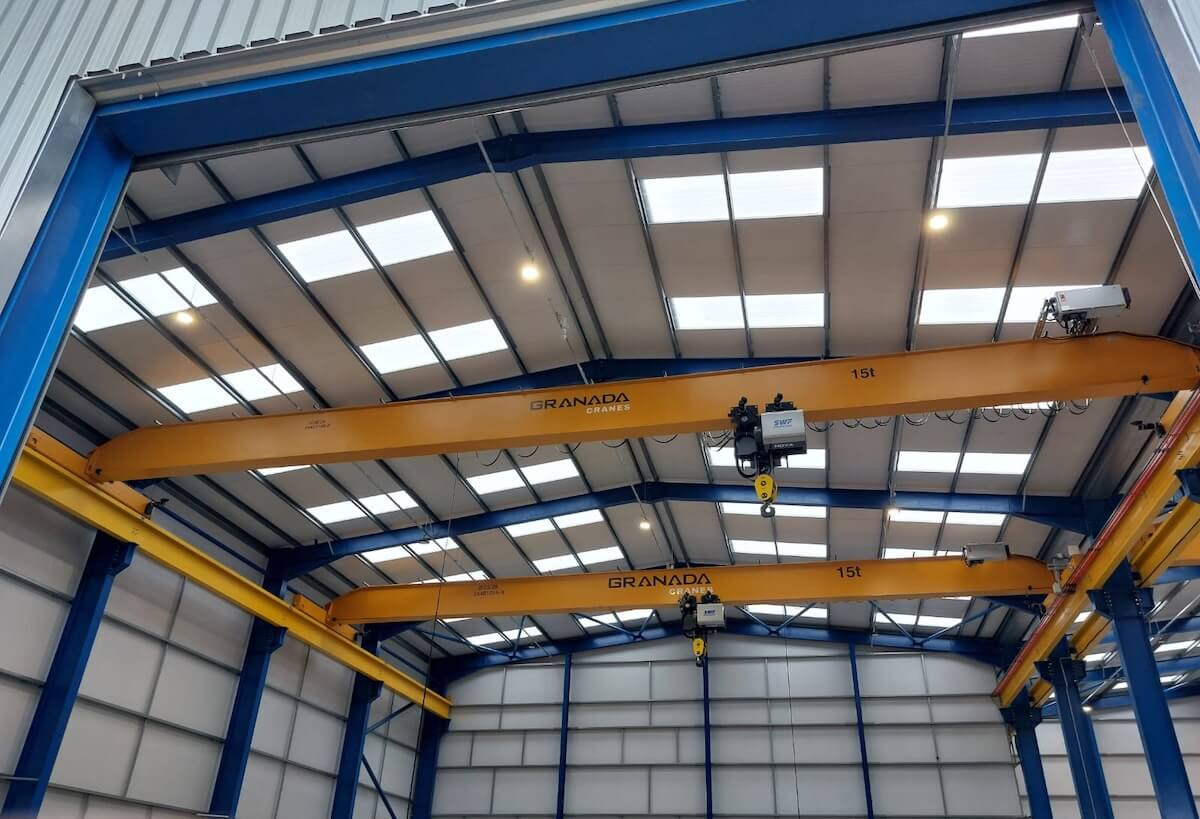
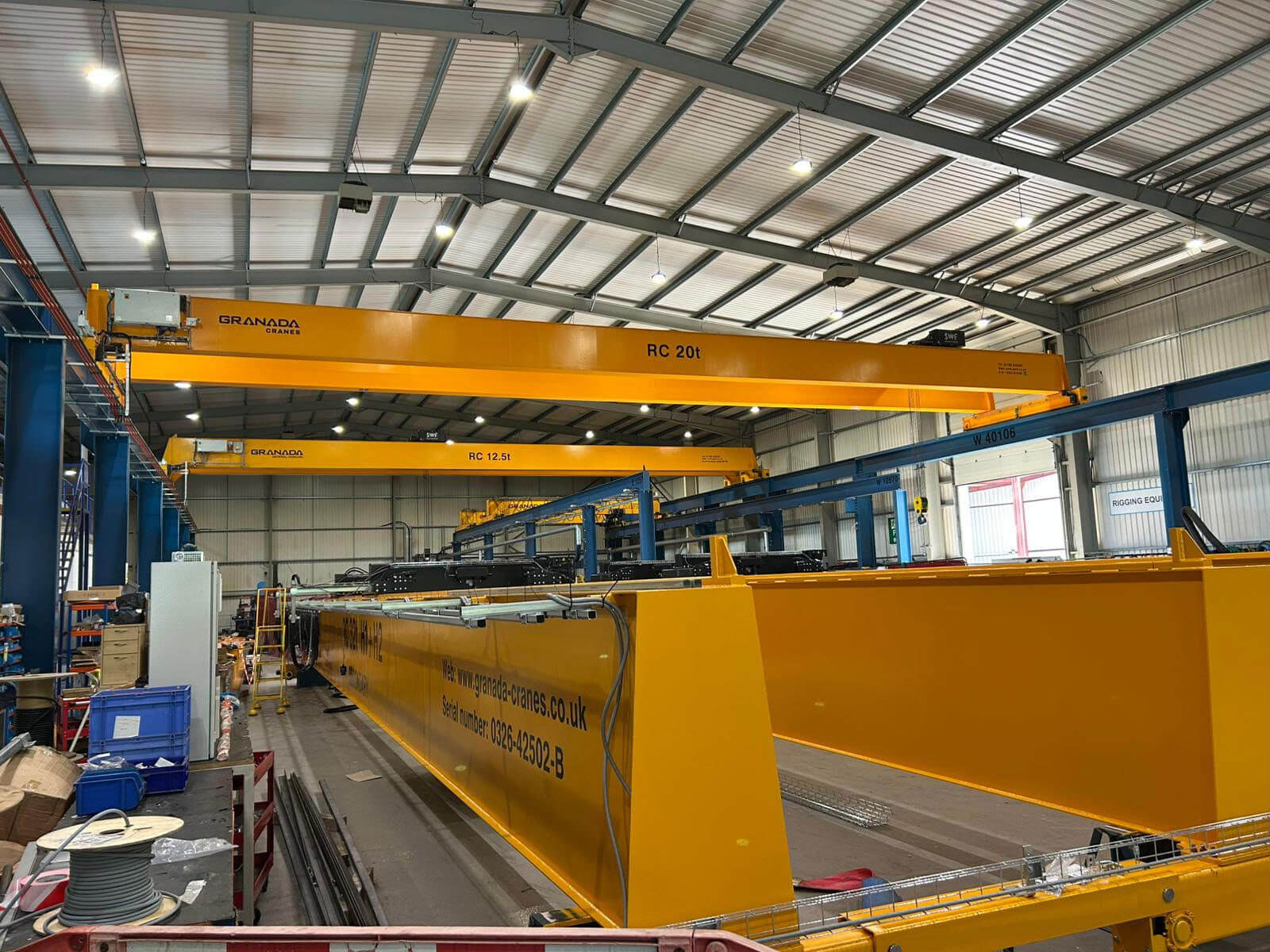
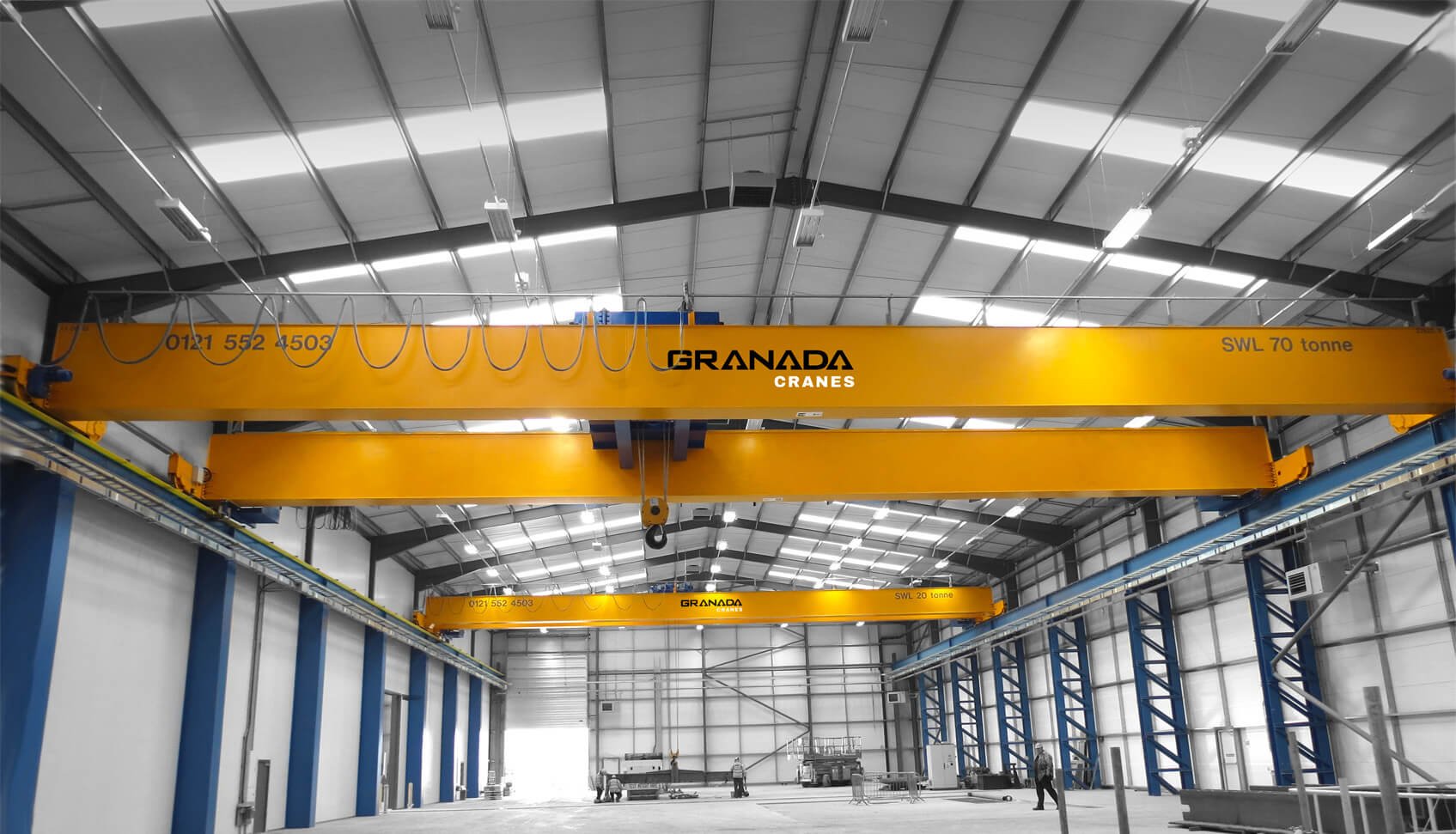
The specific checks depend on the equipment type, but for an overhead crane, the examiner will typically inspect:
Overhead Crane Inspection Points
- Crane structure – girders, end carriages, cross members for cracks, corrosion, deformation
- Runway rails and rail fixings – wear, alignment, security
- Wheels and wheel bearings – wear, damage, free rotation
- Hoist mechanism – drum, gearbox, motor, rope anchorage
- Wire rope or chain – wear, corrosion, broken wires, elongation
- Hook and hook block – wear, deformation, safety catch operation
- Brakes – holding capacity, adjustment, wear
- Limit switches – upper, lower, and travel limits functioning correctly
- Overload protection – where fitted, correct operation
- Controls – pendant, radio, cab controls functioning correctly
- Electrical systems – wiring, festoon, conductor bars, collectors
- Safety labels – SWL marking visible and correct
What Does the Report Contain?
After the examination, you’ll receive a written report. LOLER specifies what this must include:
Required Report Contents Under LOLER
- Name and address of employer
- Address of premises examined
- Description and identification of equipment
- Date of last thorough examination
- Safe working load (SWL)
- Date of this examination
- Details of any defects found
- Whether defects are immediate or timed
- Date by which defects must be rectified
- Whether safe to continue in service
- Date of next examination due
- Name and signature of competent person
You must keep reports for at least two years (or until the next report, plus two years). They should be readily available for inspection by the HSE or local authority.
What Happens If Defects Are Found?
If the examiner finds problems, they’ll be categorised as either immediate or timed defects:
Immediate Defects
A serious risk – equipment must be taken out of service immediately until repaired.
- Equipment cannot be used
- Must be reported to HSE within 24 hours by the examiner
- Cannot return to service until defect rectified and re-examined
Timed Defects
Not immediately dangerous but will become so if not addressed within a specified timeframe.
- Equipment can continue in service temporarily
- Deadline for repair specified in report
- Must be rectified before deadline expires
Even minor observations should be addressed promptly. Left unattended, small issues become big problems – and could result in an immediate defect at the next examination.
Who Can Carry Out LOLER Inspections?
LOLER requires thorough examinations to be carried out by a competent person. But what does this mean?
A competent person must have:
- Appropriate practical and theoretical knowledge of the equipment being examined
- Experience of examining similar equipment
- Independence and impartiality – able to make objective judgements
- Integrity – will report defects honestly, regardless of commercial pressure
Who Typically Provides Competent Persons?
- Insurance company inspection services – often tied to engineering insurance policies
- Independent inspection bodies – specialist testing and inspection companies
- Crane service companies – qualified engineers employed by servicing providers
- In-house engineers – possible but must be genuinely competent and independent from day-to-day maintenance
The competent person doesn’t need specific qualifications, but they must be able to demonstrate competence for the specific equipment they’re examining. An engineer competent to examine fork-lift trucks isn’t automatically competent to examine overhead cranes.
LOLER Inspection vs Insurance Inspection
Many businesses have engineering insurance that includes inspection services. Are these the same as LOLER examinations?
Usually, yes – insurance inspections are typically designed to satisfy LOLER requirements. However, you should confirm this with your insurer. Check that:
- The inspection covers all LOLER requirements (not just insurance concerns)
- Reports contain all information required by LOLER
- Inspection frequency matches LOLER requirements (especially for lifting accessories)
- You receive copies of all reports promptly
If you don’t have engineering insurance or your policy doesn’t include inspections, you’ll need to arrange thorough examinations separately.
Preparing for a LOLER Inspection
To ensure your inspection goes smoothly:
Before the Examiner Arrives
- Make the equipment available – clear access, not in use during inspection
- Have previous examination reports ready
- Gather maintenance records and service history
- Note any defects, incidents, or concerns since last examination
- Ensure safe access to all parts of the crane (ladders, platforms, PPE)
- Have someone available who knows the equipment and can operate it
- Collect all lifting accessories that need examining
Good preparation helps the examiner complete a thorough inspection efficiently, minimising disruption to your operations.
Common Questions About LOLER Inspections
Only if you have a genuinely competent person on staff who is independent from day-to-day maintenance responsibilities. In practice, most businesses use external examiners to ensure true independence and avoid conflicts of interest.
Technically, the equipment should not be used until examined. Operating lifting equipment with an overdue thorough examination is a breach of LOLER and could result in prosecution if an incident occurs.
The crane will need to be available for testing, which means it can’t be lifting loads during the examination. However, a competent examiner can often work around production schedules – early morning, late afternoon, or during breaks.
Yes, provided they’re genuinely competent to do both. However, many companies prefer separation – one provider for routine servicing, another for thorough examination – to ensure true independence.
Costs vary depending on equipment type, complexity, location, and provider. For overhead cranes, expect to pay based on time spent plus travel. Many service providers offer combined service and examination visits for efficiency.
How Granada Cranes Can Help
Granada Cranes provides LOLER thorough examinations for overhead cranes, gantry cranes, jib cranes, hoists, and lifting accessories across the UK.
- Competent, experienced examiners – engineers with extensive knowledge of overhead lifting equipment
- Full written reports – compliant documentation for your records
- Defect repairs – if issues are found, we can often repair them immediately
- Reminder service – we’ll track your examination due dates
- Combined visits – service and examination in one visit to minimise disruption
- Nationwide coverage – we cover England, Scotland, and Wales
Whether you need a one-off examination or an ongoing inspection programme, we can help you stay compliant.
Need a LOLER Inspection?
Our engineers provide thorough examinations for overhead cranes and lifting equipment across the UK.
Summary
LOLER inspections (thorough examinations) are a legal requirement for all lifting equipment. Overhead cranes and hoists need examining at least every 12 months, while lifting accessories require inspection every 6 months.
The examination must be carried out by a competent person who will check all safety-critical components, test the equipment’s operation, and produce a formal written report. If defects are found, they must be rectified – immediately for serious issues, or within a specified timeframe for less critical problems.
Keep your examination reports on file, maintain your equipment between inspections, and don’t let certificates lapse. The cost of compliance is far less than the cost of an accident or prosecution.
The advice, graphics, images, and information provided herein are for general educational and informational purposes only and are intended to promote overall safety awareness. They do not constitute legal, medical, or other professional advice or services and should not be relied upon as a substitute for consultation with suitably qualified professionals. The content is not intended to be comprehensive, and users should seek independent professional advice appropriate to their specific circumstances.